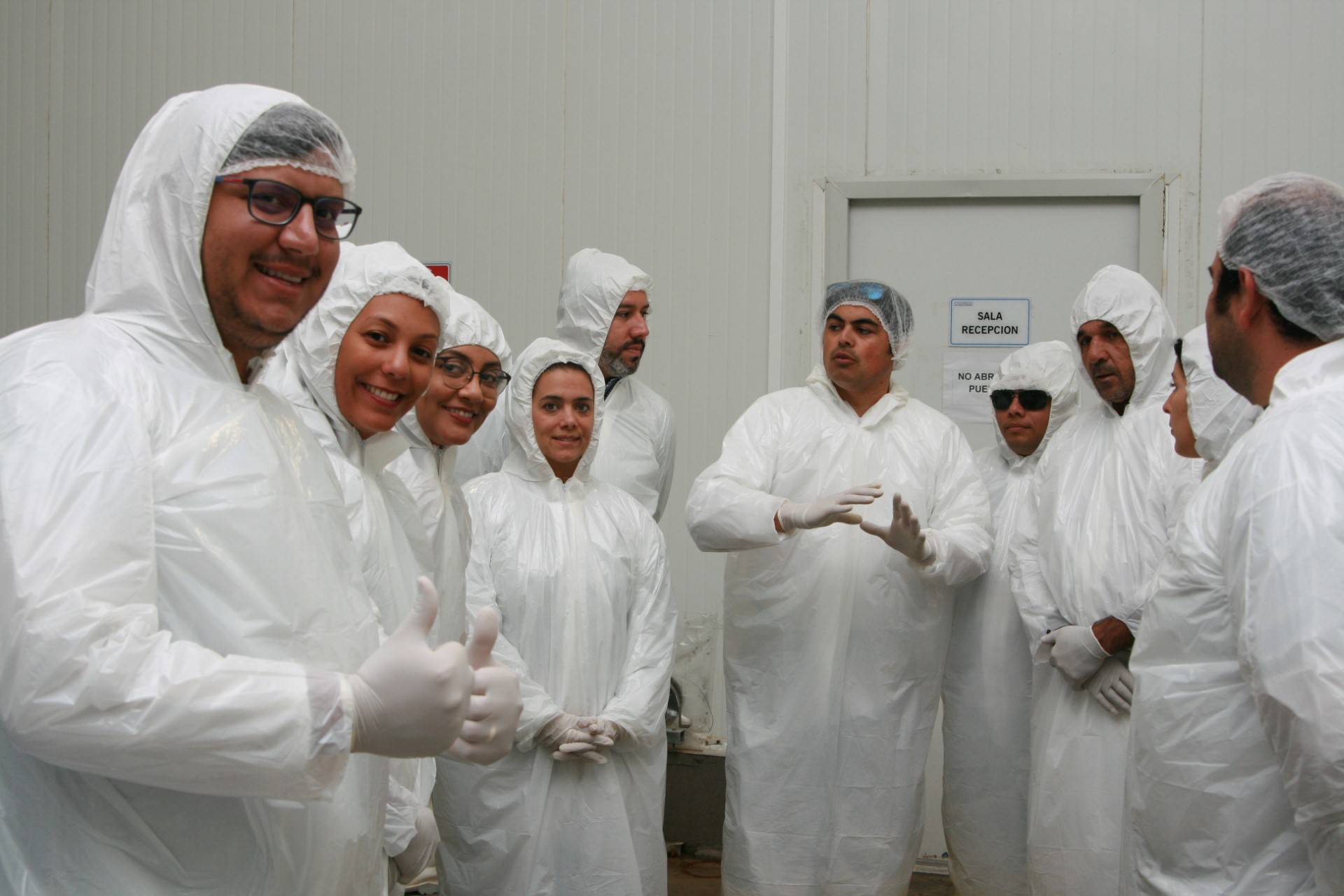
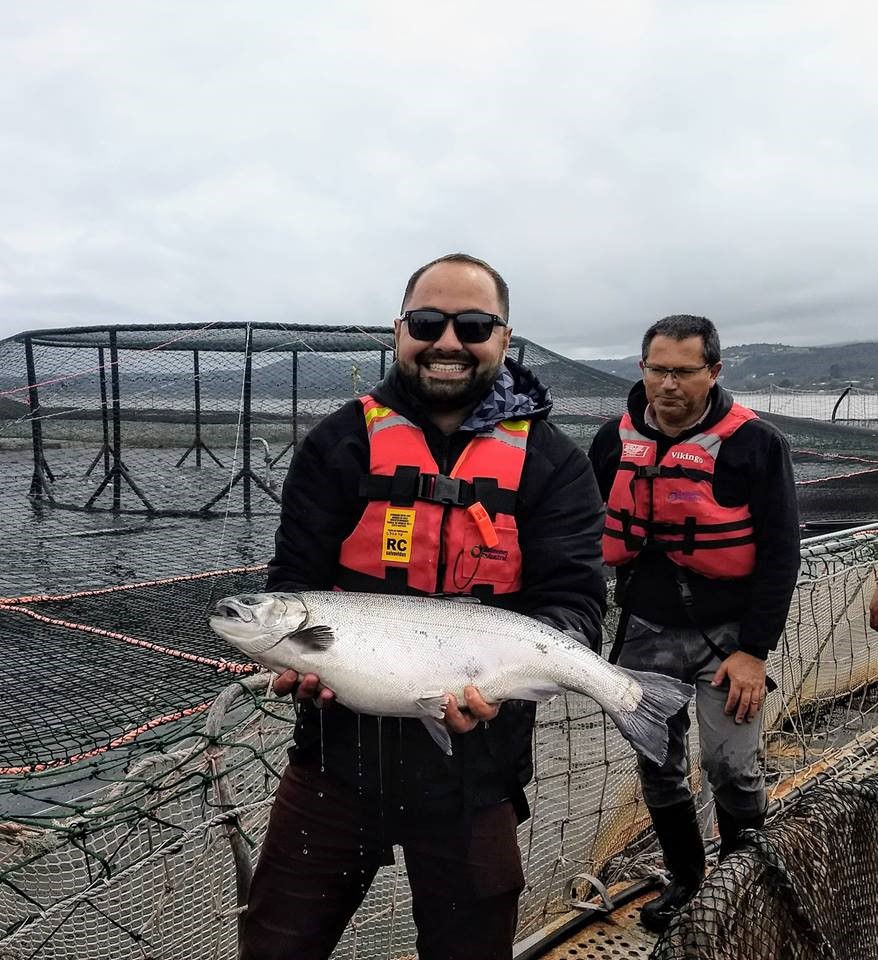
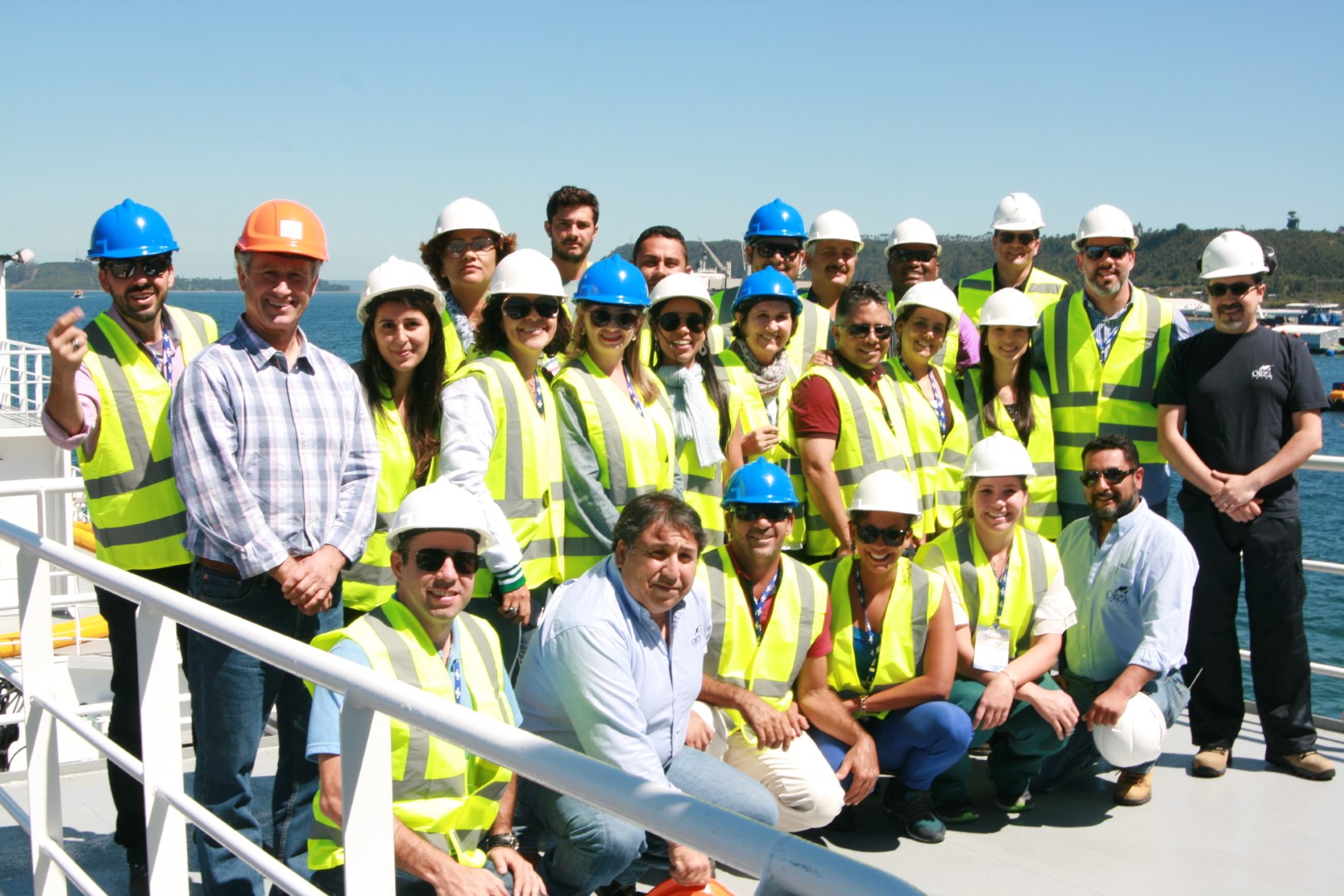
In December 2018, around 20 aquaculture entrepreneurs from the state of Mato Grosso (Brazil) visited the Los Lagos region to learn about new technologies and production processes applied to Chilean aquaculture.
The delegation travelled to Puerto Montt to visit production sites and supplier companies, aiming to acquire knowledge and assess the potential adoption of technologies in their state’s emerging aquaculture sector.
From Brazil, the technical visit was coordinated by the Brazilian Service of Support for Micro and Small Enterprises (Sebrae) of Mato Grosso, while in Chile the organisation was led by Greetech, headed by Christian Pérez.
Visits across the aquaculture ecosystem
The programme, carried out between December 3 and 8, included visits to different components of southern Chile’s salmon farming ecosystem, including:
– Ventisqueros’ “Chincui” processing plant
– A Salmones Austral grow-out site
– Technology providers such as AKVA Group Chile, Innovex, Sitecna, and SAAM
– Institutions including i-mar, ProChile, and SalmonChile
– Caleta Bay processing plant
– The ATC Patagonia R&D Centre of Empresas AquaChile
These visits allowed Brazilian producers to observe first-hand production processes, technological solutions, management models, and the level of integration between companies, industry associations, and public institutions.
Chile as an aquaculture technology hub
Valeria Louise Da Silva, aquaculture project manager at Sebrae Mato Grosso, had previously visited the local industry, although with a production-focused perspective. On this occasion, the interest was centred on the technological component.
“We discovered that this country is also an aquaculture technology hub, and for that reason we wanted to bring Brazilian producers to explore new alternatives that will allow them to develop their businesses sustainably,” said Da Silva, also highlighting the integration in Chile between public policies, the private sector, and academia.
Mato Grosso is widely recognised for its strength in agribusiness—particularly soybeans, corn, and wheat—but in recent years Sebrae has intensified its support for aquaculture through training, technology transfer, and the promotion of best production practices.
Currently, the main species farmed in the state are tambaqui, pintado, pirarucu, and more recently, tilapia.
Technological needs and business vision
One of the participants, André Santos, owner of Porto Nogueira Pescados, produces around 250 tonnes of tambaqui and pintado annually in northern Mato Grosso.
His company manages the full production cycle, from ova to processing (evisceration), with subsequent sales in the local market.
Speaking to AQUA, Santos said his interest was in identifying “technologies for production development that can be applied to our reality, both in farming and processing.”
He showed particular interest in production management software, considered a key tool for efficient business administration.
Following the experience, he highlighted that he takes away “an excellent impression of the Chilean industry. There is a constant drive for technological improvement and a positive impact on the region’s social and economic development. For Brazil, it would be very important to move in the same direction.”
International exchange and industry integration
This technical visit represented an early instance of international exchange between Brazilian producers and the aquaculture ecosystem of southern Chile, reflecting a growing interest in understanding established production models and applied technological solutions.
The experience demonstrated how coordination between producers, suppliers, industry associations, and public institutions creates an integrated system that has positioned Chilean salmon farming as a benchmark in Latin America.
Outlook and continuity
In subsequent years, new delegations from Brazil would return to tour the salmon farming ecosystem of southern Chile, consolidating a line of technical exchange and international collaboration focused on innovation, sustainability, and productive development.





 visited the Los Lagos region to learn about new technologies and production processes applied to Chilean aquaculture. The delegation travelled to Puerto Montt to visit production sites and supplier companies, aiming to acquire knowledge and assess the potential adoption of technologies […])